

Browse by Category
Folklore and Legends Paranormal Places Urban Legends True Crime

A chronicle of folklore, and the stories we whisper to keep the dark company.
Welcome to the Lore Journal, the written heart of Carman Carrion’s world.
Here you’ll find more than simple articles. These posts are small doorways into strange traditions, forgotten legends, and unsettling corners of history. Each entry explores the tales humans have told for centuries to explain the unexplainable: the spirits in the trees, the shadows in the cemetery, the creatures that arrive with winter winds.
Some stories are ancient.
Some are modern.
All of them carry a spark of truth wrapped in mystery.
The Lore Journal expands on the themes of the podcasts, diving deeper into folklore, paranormal places, urban legends, and the darker threads of human belief. Think of it as a companion grimoire to the audio shows: a place to linger over details, trace origins, and wander through the haunted library of the past.
Whether you’re here for eerie myths, chilling histories, or simply a good unsettling read, you’ve found the right corner of the internet.
Choose a category, light a candle, and begin.
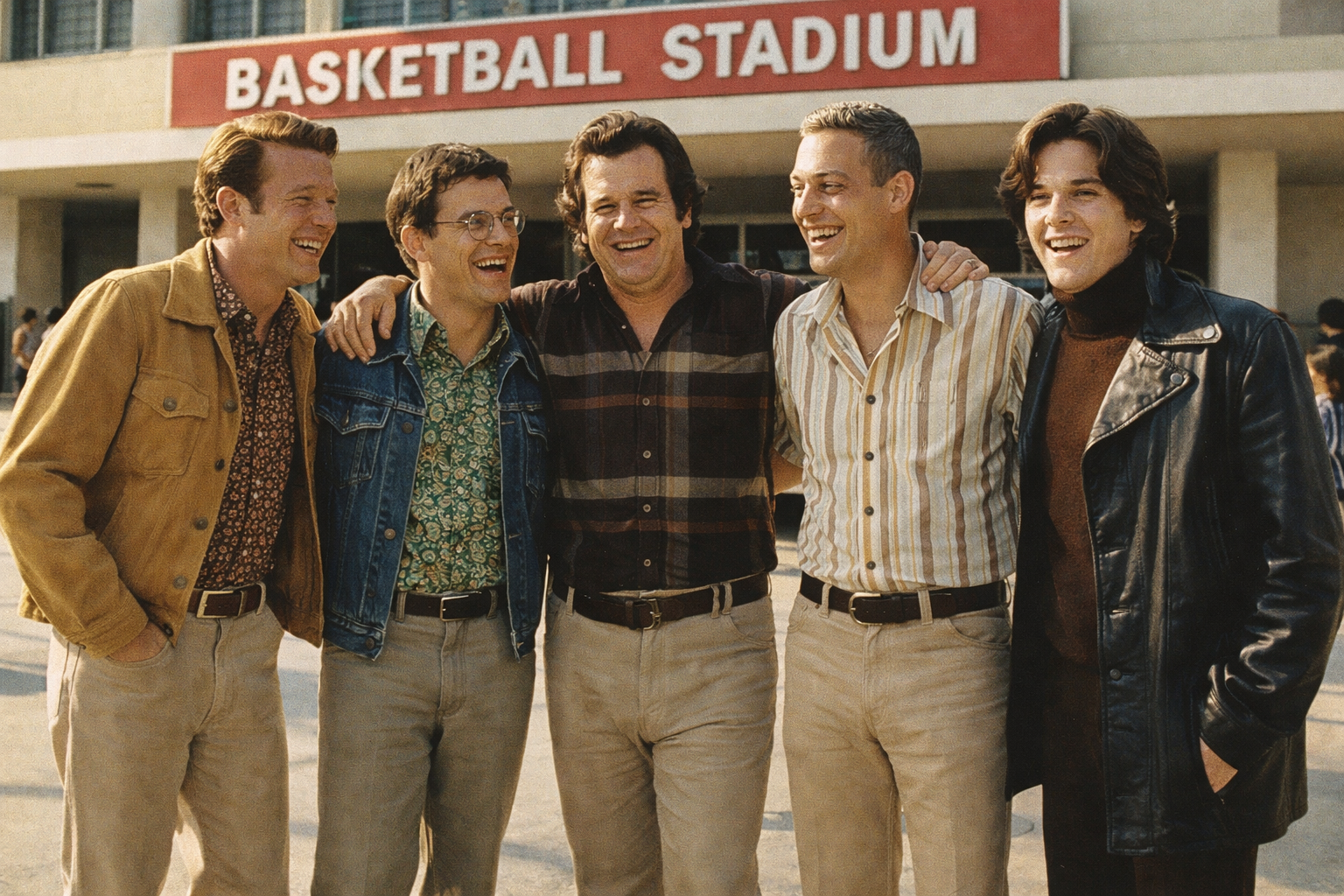
The Yuba County Five: America's Most Baffling Cold Case
On a cold February night in 1978, five friends went to watch a basketball game. They never came home. What happened in the mountains of Northern California that night remains one of the most confusing and heartbreaking mysteries in American history. This isn't a story about strangers or drifters—this is about five young men who loved basketball, who lived with their families, who had plans for the next day. This is the story of the Yuba County Five.
The Boys
To their families, they were simply "the boys." Five friends from Yuba City and Marysville, California, bonded by their love of sports and each other.
Gary Mathias, 25, was the outlier in the group. He'd served in the Army in West Germany but developed drug problems and was diagnosed with schizophrenia, which led to a psychiatric discharge. By 1978, though, Gary was doing well. He lived with his parents, took his medication regularly, and worked part-time in his stepfather's gardening business. His doctors called him "one of our sterling success cases." Gary was athletic, had played harmonica in a rock band in high school, and was known as a great brother.
Jack Madruga, 30, was an Army veteran who owned and cherished his turquoise-and-white 1969 Mercury Montego. He was quiet and introverted, but those who knew him remembered him as very smart, kind, and loving. Jack had mild learning disabilities that were never formally diagnosed, but he was capable enough to have a driver's license and lived independently with his parents.
Ted Weiher, 32, was a gentle giant. He was routine-oriented—he needed to be in bed by a certain time, and structure mattered to him. Ted had mild intellectual disabilities and lived with his parents. His family described him as sweet and friendly, though he sometimes struggled with what others might consider common sense.
Jackie Huett, 24, was talkative and loving. He had mild learning disabilities and was inseparable from Ted. The two were best friends, and Jackie often followed Ted's lead.
Bill Sterling, 29, was deeply religious and close with Jack Madruga. He was an avid bowler, very athletic, and remembered by everyone as a sweet person. Bill volunteered with several churches in the area, reading Bible quotes to patients in mental hospitals.
They'd all met through Gateway, a program run by a Yuba County nonprofit that helped people with intellectual disabilities. They played basketball together on a team called the Gateway Gators. And on February 24, 1978, they had something to look forward to: a Special Olympics basketball tournament the next day in Sacramento. The winning team would get a week-long trip to Los Angeles, including a visit to Disneyland.
Their uniforms were laid out on their beds at home. Ted had asked his mother to wash his new high-top sneakers for the tournament. Gary had reminded his mother not to let him oversleep. These guys were excited.
A Normal Friday Night
The plan for February 24 was simple: drive about 50 miles north to California State University at Chico to watch their favorite team, the UC Davis Aggies, play against Chico State. It was an easy drive—they'd made it many times before. Jack Madruga would drive his Mercury Montego. They'd watch the game, then head home to get ready for their own tournament the next morning.
Everything went according to plan. All five friends piled into Jack's car around 6:00 p.m. and headed to Chico. They arrived at the game safely, and an editor from the Chico newspaper even remembered seeing them there—they stood out a bit, sitting away from the main crowd. UC Davis won.
After the game, around 10:00 p.m., they stopped at Behr's Market, a convenience store just three blocks from the college. A store clerk remembered them arriving just before closing. They bought snacks—candy bars, chocolate milk, sodas—for the ride home. They seemed happy. They were seen heading south toward Yuba City, the direct route home along Highway 70.
That was the last confirmed sighting of them alive.
When They Didn't Come Home
The families started panicking Saturday morning. When the boys didn't show up for breakfast, their mothers began calling each other around 5:00 a.m. None of the five had come home. This was completely out of character. These weren't guys who stayed out all night (Gary was the only one who'd ever stayed out overnight before, and even that was rare). They had a tournament to play in. They had everything ready.
Jack Madruga's mother called the Yuba County Sheriff's Department Saturday evening, but was told to wait 24 hours in case the men showed up. By Sunday, the families couldn't wait any longer. A formal missing persons report was filed, and the search began.
Police started searching the route between Chico and Yuba City. They found nothing. No sign of the car. No sign of the men. It was as if they'd vanished into thin air.
The Abandoned Car
On Monday, February 27, a U.S. Forest Service ranger reported seeing an abandoned Mercury that matched the description. He'd actually first spotted it on February 25, but hadn't thought much of it—lots of people drove up into the Sierra Nevada mountains that time of year to go cross-country skiing. But when he saw the missing persons bulletin, he recognized the car and called it in.
On February 28, deputies found Jack Madruga's Mercury Montego. But it wasn't anywhere near Yuba City. It wasn't on Highway 70. It wasn't even close to the route home.
The car was on a remote mountain road in the Plumas National Forest, 70 miles northeast of Chico and about 52 miles from Yuba City—in completely the wrong direction. The vehicle was at an elevation of about 4,200 feet, stuck in a snowbank on the Oroville-Quincy Highway, an unpaved, isolated forest road.
And here's where things got really strange.
The car wasn't seriously stuck. The snow wasn't that deep. Five healthy men could have easily pushed it out. The gas tank was still a quarter full. The keys were missing, but when police hot-wired the car, it started right up without any problems. There was nothing mechanically wrong with it. One window was rolled down. The doors were unlocked.
Inside, investigators found the empty wrappers and containers from the snacks they'd bought at Behr's Market. There were programs from the basketball game. A road map of California was neatly folded in the glove compartment. The car's underside showed remarkably little damage for having driven up a rough mountain road—as one investigator noted, "The driver had either used astonishing care and precision, or else he knew the road well enough to anticipate every rut."
But the men? Gone. No sign of them anywhere.
The Mysterious Witness
After the investigation became public, a man named Joseph Schons came forward with a strange story. Schons, a Sacramento resident, said he'd been on that same mountain road on the night of February 24. He owned a lodge up in the mountains and had driven up to check on skiing conditions.
While up there, his car became stuck in the snow. Then, as he was trying to free it, he realized he was having a heart attack. He got back in his car, turned on the heat and lights, and tried to stay calm.
Around six hours later, according to Schons, a car pulled up behind his. He saw headlights. He claimed that six people got out—and one appeared to be a woman holding a baby. He called out for help, but immediately the car's lights went out and the people went silent. He called out again. Nothing.
About two hours later, he saw flashlight beams outside his car. Once again, he called for help. The lights went out.
Eventually, Schons's car ran out of gas. He managed to walk eight miles down the mountain to get help. As he walked, he passed the Mercury Montego, though at the time he didn't know whose car it was.
Was this the Yuba County Five? Were there really six people? A woman and a baby? Or was Schons, in the grip of a heart attack and hypothermia, hallucinating or confused? Investigators were never able to confirm that a woman and baby were on the mountain that night. But it was the only potential witness account they had.
The Long, Cold Winter
For months, there was nothing. Snow blanketed the mountains. Search efforts were hampered by weather. The families waited. Hoped. Prayed.
Then spring came, and the snow began to melt.
The Grim Discoveries
On June 4, 1978—more than three months after the men vanished—a group of motorcyclists were riding trails in the Plumas National Forest. They came across a Forest Service trailer about 19.4 miles from where the Mercury had been found. The trailer was an emergency shelter for firefighters and forest workers, stocked with supplies.
The front window was broken.
When they opened the door, they were hit by a terrible smell. Inside, wrapped in eight sheets, was a body.
It was Ted Weiher.
And the condition of his body, and the state of the trailer, raised more questions than answers.
Ted's Final Weeks
Ted Weiher had been dead for weeks, but the evidence suggested something impossible to fully comprehend. Based on the growth of his beard and the state of his body, investigators estimated he'd survived for eight to thirteen weeks after disappearing—possibly into May.
He'd lost more than 100 pounds. His body weight at death was just 120 pounds. His feet were horrifically frostbitten, with gangrene so severe that he'd lost three toes from his right foot and two from his left. His leather shoes were missing. He was wearing the same velour shirt and lightweight pants he'd worn to the basketball game.
On a table next to the bed were his personal effects: his wallet (with cash still inside), his gold necklace, a nickel ring engraved with "Ted," and a partially melted candle. There was also a gold Waltham watch with a missing crystal that his family said didn't belong to any of the five men.
Someone had carefully wrapped Ted in those eight sheets. With his gangrenous feet, he couldn't have done it himself—the pain would have been unbearable. Someone else had been there with him.
But here's the part that haunts everyone who's ever studied this case.
The trailer had everything Ted needed to survive. The fireplace had matches sitting right there. There were paperback novels that could have been used as kindling. Heavy forestry clothing that could have kept him warm was stored in the cabin. Wooden furniture and playing cards—all burnable materials.
Ted never lit a fire.
In a shed just outside, there was a propane tank connected to the trailer's heating system. "All they had to do was turn that gas on," Yuba County Lieutenant Lance Ayers said, "and they'd have had gas to the trailer, and heat."
Ted never turned it on.
And the food—oh god, the food. In a storage shed outside, there were C-rations. Military-style canned meals. About three dozen had been opened and eaten, pried open with a P-38 can opener—a small military tool that only someone with Army experience would know how to use. Gary Mathias and Jack Madruga were the only two in the group who'd served in the military.
But in another locker in that same shed, there was enough dehydrated food to keep all five men fed for an entire year. That locker had never been opened. It hadn't even been touched.
Ted Weiher died of exposure and starvation in a fully stocked emergency shelter.
Inside the trailer, investigators found Gary Mathias's tennis sneakers.
The Others
Two days after finding Ted, searchers located the remains of Jack Madruga and Bill Sterling. They were found eight miles from the trailer, on opposite sides of the mountain road, closer to where the car had been abandoned. Animals had scattered what was left.
Jack Madruga's body had been picked apart and dragged to a nearby stream. The car keys were still in his pants pocket. Cause of death: hypothermia and exposure.
Bill Sterling's remains were mostly just bones scattered across the forest floor. Investigators couldn't even determine a clear cause of death.
The next day, Jackie Huett's father made the most heartbreaking discovery any parent could make. About two miles from the trailer, he found some of his son's remains under a bush—part of his backbone, his jeans, his shoes. Jackie's skull was discovered about 300 feet away. Cause of death: hypothermia.
About a quarter-mile from the trailer, searchers found three Forest Service blankets and a rusted flashlight lying by the side of the road.
And Gary Mathias? They never found him. He's still listed as missing on the Yuba County Sheriff's website to this day. His tennis shoes were in the trailer where Ted died, suggesting he'd been there. Investigators theorized he might have swapped his sneakers for Ted's sturdier leather shoes—either because his own feet were too swollen from frostbite to fit in the sneakers, or because he was preparing to leave the trailer and try to make it out on foot.
But no trace of Gary Mathias has ever been found.
The Questions That Won't Go Away
Almost fifty years later, this case still makes no sense. Every logical explanation runs into a wall of contradictions.
Why did they drive up the mountain in the first place? The route home was straightforward—straight down Highway 70. Instead, they drove 70 miles in the opposite direction, up into the mountains. Some investigators theorized that Gary might have wanted to visit friends in the small town of Forbestown, and they'd taken a wrong turn near Oroville. But the men had made the trip to Chico many times. They knew the way home.
Why did they abandon the car? It wasn't stuck badly. Five men could have pushed it out. There was gas. It ran fine. Even if they couldn't free it, why walk up the mountain instead of down? Walking down would have led them back to the main road, to civilization, to help.
Why did they walk nearly 20 miles in the snow? They had no winter gear. They were wearing the clothes they'd worn to a basketball game—lightweight shirts, regular shoes. Yet they somehow made it all the way to that trailer, following what might have been snowcat tracks left by a Forest Service vehicle that had passed through the day before.
What happened to Jack Madruga and Bill Sterling? They never made it to the trailer. Did they collapse on the way? Why were they on opposite sides of the road? Why did Jack still have the car keys?
Why didn't Ted use the supplies? This is the question that keeps people up at night. He was in a shelter designed for emergencies. There was food. Heat. Materials for a fire. He ate some C-rations, which means he knew the food was there. But he never opened the main food locker. He never started a fire. He never turned on the heat.
Ted's family said he had difficulty with common sense and tended to follow rules rigidly. There's a theory that he and whoever was with him were afraid to use the supplies because they didn't belong to them—afraid they'd be accused of theft or burglary since they'd broken the window to get in. In their confusion, fear, or cognitive limitations, they may have felt that eating a few military rations was one thing, but really using the cabin's systems was crossing a line.
Who was with Ted when he died? Someone wrapped him in those sheets. Someone was eating those C-rations with a military can opener. The evidence suggests Gary Mathias was there, and possibly Jackie Huett. But when did they leave? Why did they leave? Where did they go?
Was there foul play? The families have always believed something forced the men up that mountain. "There was some force that made them go up there," Jack Madruga's mother said. "They wouldn't have fled off in the woods like a bunch of quail. We know good and well that somebody made them do it." Some family members theorized the men saw something at the basketball game—maybe in the parking lot—that got them into trouble. Maybe they witnessed a crime without realizing it.
But there were no bullet holes. No stab wounds. No signs of violence on any of the bodies. No evidence of anyone else being in that trailer or on that mountain. The only potential witness was Joseph Schons, and his account remains impossible to verify.
The Theories
Over the decades, dozens of theories have emerged. None of them fit all the facts.
A wrong turn — Maybe they took a wrong turn trying to visit Gary's friends in Forbestown, got disoriented, and ended up on the mountain road. But why keep driving? Why not turn around when they realized they were lost?
Impaired judgment — All five men had either intellectual disabilities or psychiatric conditions. Under stress, in unfamiliar circumstances, they might have made poor decisions. But they'd successfully navigated their lives, held jobs, played sports, made that trip to Chico multiple times. They weren't incapable.
Fear or paranoia — Gary Mathias had schizophrenia. Could he have had a psychiatric episode that scared the others? Could they have been fleeing something—real or imagined? But Gary was stable on his medication. His doctors considered him a success story.
Someone chased them — Did someone threaten them after the game? Force them up the mountain? But there's no evidence of another vehicle, no sign of pursuit, no witnesses to any confrontation.
Drug involvement — Some have speculated drugs were involved, though there's no evidence for this. The men bought snacks after the game, not alcohol or drugs.
They were lost and panicked — Maybe they got confused in the dark, ended up on the mountain road, got stuck, and then in their panic made one bad decision after another. But the driver navigated that rough mountain road remarkably well. And once they found the trailer—a shelter—why not use it properly?
What We'll Never Know
Jack Madruga died on that mountain, the car keys still in his pocket. We'll never know why he didn't drive them home.
Bill Sterling died somewhere along that road. We'll never know what his last thoughts were.
Jackie Huett made it partway toward the trailer before the cold claimed him. We'll never know if he was trying to find help or if he was just trying to survive.
Ted Weiher spent his final weeks in that trailer, slowly starving and freezing, surrounded by everything he needed to live. We'll never know why he didn't—or couldn't—save himself.
Gary Mathias vanished completely. We'll never know if he died on that mountain, tried to hike out and succumbed to the elements elsewhere, or if something else entirely happened to him.
The Legacy
The case of the Yuba County Five has been called "America's Dyatlov Pass"—a reference to the nine Russian hikers who died under mysterious circumstances in 1959. It's been the subject of podcasts, documentaries, books, and countless internet forums. Netflix featured it in "Files of the Unexplained."
For the families, though, it's not a mystery to discuss over coffee or debate online. It's a wound that never healed.
Lieutenant Lance Ayers, who went to high school with Ted Weiher and his brothers, became consumed by the case. Those who knew him said it all but haunted him. He followed up on countless tips over the years, but was able to punch holes in all of them.
The families have had to live with not just grief, but confusion. The not knowing. The questions without answers.
Author Tony Wright spent four years researching the case for his book "Things Aren't Right: The Disappearance of the Yuba County Five." His conclusion? "We lack concrete evidence. Mostly it's circumstantial stuff—town talk, rumors. This case is a journey into madness."
Ted's nephew, Dallas Weiher Jr., describes his 12th birthday as "just a house full of sad people" because it came five days after his uncle disappeared. He's spent his life certain that foul play was involved. "This wasn't a bunch of [people with intellectual disabilities] who got lost because they were too stupid to know what they were doing," he insists. "These guys had very specific wants, desires, talents and abilities. And what one lacked, the other had. There was a combined acumen there."
The Enduring Mystery
What happened on that February night in 1978?
Five friends went to a basketball game. They bought some snacks. They headed home. And then... something. Something made them drive into those mountains. Something made them abandon a working car. Something made them walk through the snow for miles, going uphill instead of down. Something prevented them from properly using the shelter and supplies that could have saved their lives.
Was it fear? Confusion? Poor judgment compounded by panic? A wrong turn that spiraled into catastrophe? Or was there something more sinister—something we've never uncovered?
The case remains officially unsolved. Gary Mathias remains officially missing. And the families still wait for answers that may never come.
Forty-seven years later, the Yuba County Five still pose the same maddening questions: Why did they go up there? Why didn't they save themselves? What happened in those mountains?
The snow has melted and refrozen a thousand times since that winter. The trailer still stands in the Plumas National Forest. And somewhere out there—in official files, in fading memories, in the soil and snow of those mountains—the truth is waiting.
But we may never find it.
Intent doesn't lie. People do. But sometimes, even when we find the people, we still don't find the truth.
Why True Crime Fascinates Us: The Psychology Behind Our Obsession with Real-Life Mysteries

If you’ve ever found yourself wide awake at midnight, eyes glued to a documentary about a decades-old disappearance, you are not alone. Millions of people across the world tune into true crime podcasts, binge investigative series, and swap theories in online forums like modern-day detectives around a digital campfire.
But why?
What pulls ordinary, compassionate people toward stories filled with tragedy, danger, and the darkest corners of human behavior?
The answer is far more layered than simple curiosity. True crime fascinates us because it lives at the crossroads of psychology, survival instinct, storytelling, and the eternal human need to make sense of chaos.
Let’s open the case file.
The Human Brain Loves a Puzzle
At its core, true crime is one enormous riddle.
Every case presents clues, suspects, motives, and unanswered questions. The human brain is wired to hunt for patterns, to connect dots, to solve mysteries. When we listen to a podcast episode or watch an investigation unfold on screen, our minds begin quietly assembling timelines and testing theories.
True crime invites us to play detective from the safety of our couch.
We get the thrill of investigation without the risk. It scratches the same mental itch as a crossword puzzle or escape room, just with higher stakes and real-world consequences.
And when a case is finally solved, our brains reward us with a satisfying spark of closure.
A Safe Way to Explore Danger

There’s another, deeper reason for our fascination: survival.
True crime allows us to study danger at a distance.
By hearing stories of scams, disappearances, and violent crimes, we gather information about how bad situations happen. It becomes a kind of subconscious self-defense class. Listeners often walk away thinking:
What warning signs did the victim miss?
How would I react in that situation?
What can I learn to stay safer?
Psychologists call this “protective vigilance.” True crime lets us rehearse fear without experiencing real threat, like watching a storm from behind thick glass.
We peer into the shadows, but we stay in the light.
The Power of Storytelling

Humans have always been drawn to stories of villains and heroes, long before podcasts and Netflix series existed.
Ancient myths warned of monsters in the woods. Gothic novels thrilled readers with sinister plots. Today, true crime fills that same role, only with one chilling twist: these stories are real.
A well-told true crime narrative has all the elements of gripping drama:
Complex characters
Emotional stakes
Twists and revelations
The quest for justice
The difference is that the victims, families, and investigators are not fictional creations. They are real people whose lives changed forever.
That authenticity gives true crime its emotional weight. We aren’t just entertained. We are moved.
A Desire for Justice

True crime also taps into a powerful moral instinct.
Most of us carry a deep need to see wrongs made right. When we follow a case, especially an unsolved one, we feel invested in the outcome. We root for investigators. We ache for families. We want answers.
This is why cold cases grip us so intensely. An unsolved mystery feels like an open wound in the universe, something that demands resolution.
Listening, learning, and sharing these stories becomes a small way of standing on the side of justice.
Curiosity About the Unthinkable

There is one uncomfortable truth we can’t ignore: true crime offers a window into the parts of humanity we struggle to understand.
What makes an ordinary person commit an unthinkable act?
How can someone live a double life?
Are monsters born, or are they made?
True crime lets us examine these questions from a safe emotional distance. It allows us to explore the extremes of human behavior without stepping into them.
In a strange way, understanding darkness helps us appreciate the light.
Community in Shared Stories

Another modern element fuels the true crime boom: connection.
Fans gather in comment sections, subreddits, and social media threads to debate theories and trade insights. Listening to true crime has become a social experience, something people discuss the way previous generations dissected mystery novels or TV dramas.
There’s comfort in knowing others are just as curious, just as shocked, just as determined to figure it all out.
True crime creates communities of armchair investigators united by a shared fascination.
Respecting the Real People Behind the Stories

Of course, it’s important to remember that true crime is not just entertainment.
Behind every headline is a real victim, a grieving family, and lives forever altered. The best true crime creators treat these stories with care, empathy, and respect.
Our fascination should never outweigh our compassion.
When done thoughtfully, true crime keeps memories alive, highlights flaws in justice systems, and sometimes even helps generate new leads.
In the End, It’s About Understanding
True crime fascinates us because it speaks to something deeply human: the need to understand our world.
We listen to make sense of fear.
We watch to learn.
We follow cases to find answers.
And maybe, just maybe, we hope that by studying the darkest stories, we can help create a safer, brighter ending in the real world.
So the next time someone asks why you’re so hooked on true crime, you’ll have the perfect answer:
It isn’t about loving the macabre.
It’s about loving the truth.
Want more deep dives into the mysteries of the human mind and the cases that changed history?
Stay curious. Stay questioning. And always lock your doors.